
By The Numbers
Yusef woke, sat up and listened. He listened for any alarms, near or distant. For the groaning of fatigued metal pushed to failure. For the bang-crash of a blown lock. He listened to his own heartbeat, reassuringly steady. Every morning, this secular ritual. He slipped on his boots, left his quarters and padded to the scrubber systems bay to check the board. The same as he did every morning.
The scrubber board showed the status of thirty living-membrane panels. Each panel, securely nestled in a filtration manifold near the installation’s core, was a slab of engineered biological material supported by a sterile metal frame, roughly four times the size of a big mattress. These panels scrubbed CO2 and other contaminants from the air inside Ishtar Station. The status light glowed the only acceptable color: green. Green, the color of reassurance. Yellow was the color of irritability and headaches. Red the color of sickness and probable death. In the nine years Yusef had been living dirtside on Venus, the light had only ever turned red once. But people still died even when it wasn’t.
With this most important task complete, he returned to his room and terminal to check atmospheric pressure outside the installation’s hull. Then he checked the clock, and then the temperature in his hab block. The same order, the same way, every time. The hab temperature was troubling: still two degrees warmer than was set, as it had been for the past two weeks. No one had figured out or could explain why. That had some on edge. Yusef knew it had kept one of his subordinate enviro technicians lying awake and working through possibilities long since exhausted.
But a green board this morning. No alarms. No death. A good day so far. He exhaled deeply, turned on his hot water pot that was one of his few in-room luxuries, and fished a packet of instant coffee out of the small cabinet over his desk. Yusef stirred bitter powder into scalding water, sipped, and let the ambient noise of the installation work through him in the darkened room. He would allow himself these fifteen private minutes before he washed and dressed for his shift.
—
The canteen was as busy as ever. As busy as always. Third shift coming off, first shift going on. The ceaseless, endless churn of fifty-odd people among the two-hundred souls who called Ishtar Station home. The same faces, the same times. The same long tables and dim serving counter. The counterfeit aromas of ultra-processed food, and the tinny reek of too-often recycled cooking grease. Day in and day out. Reassuring. Mind-numbing. Sometimes the seating arrangements changed. That wasn’t often.
Yusef found his usual seat beside Clark, one of Ishtar’s senior exterior maintenance personnel. The man ate his usual beige “oatmeal” porridge with mechanical enthusiasm, not quite looking at it. Clark was thirty something, but his face was so lined and weathered from latent stress it resembled the acid-etched slopes of the basalt hills beyond the murk outside. The clatter of Yusef’s tray and silverware on the table was greeting enough for both men.
"Scrubbers okay?" Clark asked without looking up.
"Yup. Ninety-six percent."
"That’s good. What happened with that culture dieback the other week?"
"Don’t rightly know. It healed though, clean bill of health," Yusef sat down. "Upper is, I mean we’re, checking them all today. The substrates and mothers. It's been two years since the substrates were checked."
“Hm,” Clark made his sound that meant noted.
Behind the table where breakfasts and dinners were finished was a reinforced porthole of transparent laminated crystalloy, six inches thick. A clear disc holding Venusian pressure, corrosion and temperatures at bay. Ishtar Station’s interior was a pleasant seventy-one degrees; the surface outside an endless, nearly nine-hundred degree inferno that looked nothing like the brimstone Hell of Christian tradition.
The ever-present fog seemed lit from within, somehow, a sickly yellow-orange that pressed on the rim of the porthole, held back only by the meager, bluish lightstrips of the canteen. The oppressive haze of Venus' surface permitted no real sunlight, and no horizon. At ninety-three bars of pressure, the atmosphere near the ground behaved more like a liquid than a gas. Any failure of suit or seal or lock, the briefest exposure, for even a microsecond, meant certain, gruesome, mercifully instant death by crushing. A man wouldn’t even know he had perished at all.
Beyond the gloom, the plains of Ishtar Terra stretched away, broken by the distant, fanged shapes of primordial basalt formations. Ishtar Station had been here for a hair over a century but you couldn’t tell from its appearance. The exterior pressure-wall coating was laboriously refreshed every eighteen months with new biopoly sealant; another of the many products gleaned from the secretions of the extremophile chemoautotroph microbes living thirty-seven miles above them. Microbes that were harvested by the aerostatic arcologies held aloft by their vast balloons of breathing air, where the sky was open and the temperatures comparatively mild.
Yusef had been up to the nearest arcology a few times. Twice for medical evaluations, once to consult the scientists regarding irregularities with one of their crops. Each visit, he’d stood at the luxuriously wide observation windows for a long time, looking out at the roiling clouds below and the open, clear sky above; sky was something he’d started to forget existed, conceptually.
A bland, computerized voice announced the time. Yusef hurriedly finished his breakfast and bid farewell to Clark. A bell from the arcology was due to arrive at ten-thirty hours standard and he had errands in the meantime before the arrival of a visitor. Descending the miles-long, specially treated graphene-composite tether from the cloud deck like a huge elevator, the pressurized capsules delivered vital cargo and personnel down through and up out of the thick, hot, crushing atmosphere. The maintenance and monitoring of the bells and their cables was attended to, above and below, with religiosity.
—
The nearby receiving dock, connected to Ishtar Station by way of underground tunnel, was one of four such facilities serving Ishtar Terra’s installations. People, consumables and replacement components, the latter often needed, were either manufactured in the few remaining orbital facilities or shipped in from elsewhere, usually Mars. Yusef was at the dock when the bell arrived to greet Dr. Nikki LaRue, one of Selegin Corporation’s newly attached xenobiologists. She was here for a scheduled inspection of the station’s bioreactor cultures.
Inside the cavernous subterranean space the bell vented a halo of gas as it pressurized, equalized, and finally slid open its massive hatch. LaRue emerged, self-consciously tailing the clutch of rawboned, veteran surface dwellers returning planetside. Yusef recognized her manner, common to first-time and infrequent visitors: taut glances at the walls and ceilings, anxiously holding her breath. Understanding the risks of the surface, and actually being on it, were two different things.
Yusef strolled out of the now-open vestibule to the foot traffic ramp and tried to greet the doctor with a warm smile.
"Ah, Chief Yusef. Hello. I’m Dr. Larue." She extended a hand.
"Doctor," Yusef shook it. "Welcome to the surface. First time?"
"Only my second. The last was years ago. First time to Ishtar Station, though." She found Yusef’s smile wan, almost uncanny. It struck her as ill-fitting, like the man rarely used or needed it.
"Very well. Come on, then. I’m sorry, but safety orientation will be mandatory in that case. I'll take you through it back at the complex. Won’t take long, I promise."
Dr. LaRue masked her annoyance and discomfort with a shrug and forced laugh. Extensive safety briefings for surface visitors had been mandatory everywhere, as far as Yusef knew, since forever. Long ago, before his time, a logistics consultant sent down to one installation had assumed that the sounding of an emergency integrity alarm was only a drill, and had remained in a vulnerable corridor when the subsequent breach occurred. The aftermath of the incident, and exhibits of the doomed consultant’s pulped, burned remains, had been integrated into every orientation package since.
The two boarded a small, motorized cart for the short trip back to the complex. Once there, in a cramped classroom, Yusef watched the safety video with LaRue, demonstrated how various standard emergency systems worked, and instructed her on marshalling procedures in case of various incidents. The xenobiologist's composed expression didn't waver.
"Last thing, exterior travel. It shouldn’t come to that on this trip, I hope!"
“Please, no!” LaRue said with false cheer.
"HE-Vs or hardsuits are the only options for anything outside. If you aren’t in one, you die. Inside the hull, at the perimeter compartments, hardsuits mandatory for work in any area not rated triple-redundant. We don't let anyone walk or work outside the hull without a certified rating and a sign-off. Do you by chance have-”
“No, no need up there. I work in a lab,” She flicked her eyes up toward the ceiling. “And I don’t suppose there’d even be time to put on one of the suits, would there? I’ve read about the other accidents."
"Eh, well. One never knows, it’s best to be prepared for all eventualities here. But if you aren’t certified they won’t be any good, anyway. Best to sit tight and wait for help," Yusef said, pleasantly.
LaRue looked at him blankly for a moment and then smiled, briefly. With the safety brief complete, they headed deeper into the complex.
—
Despite the bigness of the term, Ishtar Station’s bioreactor bay was a small room, smaller even than the spartan, workmanlike lab Dr. LarRue typically haunted aboard Selegin’s Aerostat-Seven. The space hummed with the low, continuous sound of ventilation fans and computers. Glass and composite tanks lined one long bench, and a larger, shiny, solid tank sat at the end of the room.
These tanks each contained an environment suitable for cultivating, sustaining or otherwise developing Venusae sulfurokytos. The cloud-dwelling microorganism that now motivated, and made possible, continued human endeavor on Venus. Most groundside inhabitants called it the germ.
LaRue moved along the tanks, tablet in hand, with sharp, professional attention. She’d already spent some time pulling readouts, and carefully extracting and cataloguing samples in vials. Yusef waited out of her way, answering what questions he could.
"If the temperature drift continues on number three, you'll see a drop in yield. Slightly. The culture is still compensating. See the metabolic dip, here?” Yusef made a show of looking at and failing to understand the complex chart on LaRue’s tablet, brow furrowed. “The organisms are working harder than they should be."
"Oh."
She continued her checks, made more notes. It was some minutes before she spoke again. "The arcologies are shipping cultures at full capacity now, yields have been excellent for the past six years."
"We know." Yusef kept his voice even.
"HQ wants more, and we need all hands on deck for the increased production. I understand there have been setbacks here, but every scientist that has to make a trip down for basic troubleshooting is one we won’t have topside for a few shifts," LaRue seemed pained, almost sheepish. “These issues should not be insurmountable with the resources at your disposal. You understand, don’t you?”
“I see. Well, doctor, no one here has the expertise to tend to the germs should the vats fail or deviate. We watch them, we record the data. We can resurface the scrubber membranes with a completed batch of film ourselves. That’s all. If taking someone away from their duties above is too great a burden, I might request the administrator to ask HQ to post a scientist here, fulltime. I understand the duty usually goes to the junior personnel...”
A chilly silence solidified between them.
—
Clark's crew was heading out at thirteen hundred hours. Yusef, other duties tended to, watched them depart the yawning bay doors from the operations center’s exterior camera feeds: three HE-Vs moving out, slowly, in a line across the cracked terrain. Rotating marker lights glinted off their hulls, each coated in long-wearing, hi-vis fluorescent green. The lead rig was Clark's Breaker, a heavy industrial machine that had been on Venus for twenty-two years, and survived much. The most memorable incident was a harrowing fall into an underground lava tube that had collapsed beneath it. Clark had lived, self-recovered, and refused to elaborate about the experience.
Looking over the shoulder of the seated dispatcher, the exterior temperature displayed in the corner of the monitor read 871°F. Pressure 89.2 bar. Wind, negligible by Earth’s standards, hardly a breeze. On Venus, at this pressure, a few miles per hour meant substantial force, enough that it forced the HE-V pilots to compensate and carefully plan each step, lest they tip.
Yusef scanned the neighboring monitor, showing the HE-Vs' telemetry. Pilot vitals, reactor status, hull integrity, more, all updating continuously. The employees at the monitors watched intently for subtle deviations that might give advanced warning of any developing problems. Catching them early often saved lives, and hardware.
Clark's crew would be out for roughly four hours. About normal. Their job was to replace exterior stanchions nearing the end of their service lives along the complex’s southern pressure hull. Work parties were planned around getting the job done quickly and efficiently: time outside accumulated stress on the minds of workers in ways that weren't immediately apparent.
Yusef stretched as various personnel spoke quietly into their headsets. He glanced at an old photograph on the wall of the operations center, framed behind scratched plastic. It showed, from orbit, Venus against the black of space, and in the foreground, between the camera and the planet, the vast, skeletal span of one of the old Helios Corporation orbital construction yards.
Those sprawling orbital docks and shipyards were once the beating, industrial heart of the Dyson Swarm program way back when. Venus' location, convenient to Earth but closer to the sun, made it the obvious staging point for constructing and then slingshotting modules and cargo towards the array site. The yards, in total, were the largest artificial structures in the solar system until the array itself was completed: all girders, spacebays and pressurized work modules, each thousands of meters long and tall.
After the Rift, most of them came to ruin. Some were parted out, salvaged. Many more were left to decay in orbit or were shredded after falling into Venus's atmosphere, accidentally knocked or, some said, deliberately pushed. Some of their parts lay even now on the surface, twisted, melted, partly-ablated sculptures of steel and ceramic, scattered across the planet like whalefall bones. Yusef heard, on good authority, that squatters, criminals and other people of dubious character inhabited or hid among the remaining yards.
His mind wandered next to the old HE-V wrecks dotting the landscape near most of the surface installations, and he could not stop himself from fruitlessly looking out of the ops center’s panoramic window into the murk. There were about forty such wrecks, most from the initial surface colonization phase, abandoned where they and their brave pilots fell. Expensive machines, cutting-edge by the standards of their time. Half-buried in dust, hulls long since corroded to husks, their cockpits open to the opaque clouds. Surface work teams that had cause to go by them always gave them a wide berth, treating them with some combination of superstitious dread and reverence; reminders that other men had worked and died here, that even HE-Vs were better suited to hard vacuum than this inhospitable Gehenna.
Clark had told Yusef once, early in his time at the Station, that the old wrecks were monuments, reminders of the blood price that must always be paid in purchase of mankind's mastery. The same payment was made when he first roamed the savannah in animal hide, spear in hand. The same payment for the raising of the first skyscraper. The same as when he’d first sought the stars.
Yusef thought Clark was probably not okay back then. But since his own long stay on the surface, he’d come to see, and admire, Clark’s essential wisdom and thought about it a lot. He blinked out of his reverie and left the operations center.
—
Yusef tried to visit the sunlight spa every day, as was technically mandatory.
Each compartment of the spa was three smaller rooms: an antechamber for dressing and undressing; the main chamber with its simu-spectrum lights, immersive screens and controls, big enough for a few friends; a washing room at the far end. The lights were very good, expensive, calibrated to perfectly replicate the solar spectrum as received on Earth's surface on a clear, bright day. Temperature and humidity in the main chamber were both adjustable, capable of simulating the cold of winter in the northern climes or the blazing but still pleasant heat of summer at the equator.
Twenty minutes per session. Most crew went twice a week as they could. Yusef and others went every day, treating it the same as any other critical systems maintenance task. Just like the maintenance of scrubber membranes or other life support systems.
Yusef had only a short wait today, and spent the time chatting with Espinosa, one of Clark's pilots. Just twenty-six and only two years groundside, Espinosa was on Venus to work off the substantial private debt he’d incurred from commercial HE-V pilot school on Luna. The young man was still in the phase of adaptation Yusef thought of as enlightenment. Some grim lifers among the crew called it the yips.
Always destructive, it was the phase when the novelty of being on Venus, not above it, wore off and the daily reality of permanent surface residence took hold. Sometimes it got pretty bad: A glassy stare, dangerous levels of distraction, forgetfulness, irritability, a precipitous drop in personal hygiene indicative of declining will to live. Sufferers were kept under constant watch by fellow employees, and especially security personnel. Rotating out, for any reason, was rarely possible.
"My sister asked me, when I shipped out, when I’d be coming back," Espinosa said.
"What’d you tell her?" Yusef asked in response.
"I told her four, five years. Maybe.”
"That true?”
The young man didn't say anything for a moment. "No. I didn’t get top marks. No sponsor, nothing like that. I have to pay it all back, and this is the only billet I could get. Gonna take a decade. But it’s worth it, you know? For a better future. HE-V pilots are needed everywhere. This is just the first chapter. Paying my dues." He looked sharply at Yusef, and though he smiled Espinosa's eyes were brimming with despair. He looked close to tears.
"After a while it gets easier. Focus on the day. One day at a time."
Yusef had not lied, exactly. The sharp dislocation did eventually dull. The ache for blue sky and open horizon, a profound longing not even known by spacers, faded to something more tolerable. For most. Smart ones lived by and worshipped their routines. They built relationships with the two-hundred some souls to form an emotional horizon to orient against. They found meaning in their work, and if they couldn’t they Stockholm’d themselves good and hard until they loved it. Smart ones reminded themselves of the stakes. Every job at Ishtar manned the perimeter, the boundary, between life and lethal.
Espinosa’s despair seemed to retract all at once as he looked down to the deck between his feet and exhaled. Concealed or abated, the older man couldn’t tell. He looked up at Yusef again, and asked earnestly. "Maxwell Base. Clark says that crew doesn’t like us. Old static. You know about it?"
"They like us fine. They don’t hate us."
"Which is it?"
Yusef considered how to frame this bit of Venusian lore. "It’s irrational. Like a rivalry. During the bad years, the Rift's worst decades, the aughts, supply runs to Venus had dropped to near nothing. Even the arcologies had sustained only with some difficulty, and they tried to help where they could, but the groundside facilities all suffered pretty terrible. Hell, Ishtar had to go a stint operating twenty-three months on half scrubbers. Seventeen people died of respiratory failure.”
“The Max fared worse,” Yusef continued. “The corporate operator, a smaller firm back then, closed now, had just written it off. The employees were terrified and desperate, left alone too long. They lost over two hundred people. Lack of basics, and environmental problems. Supplies didn't reach them in time, that on top of some critical failures. Ishtar, then, we were luckier. Maxwell begged us for aid, and the administrator, ours, Ishtar’s, turned them down. There were threats, a raiding party came out, but it didn’t work. More died. It made for some bad blood, lasted awhile.”
Espinosa was quiet. He looked troubled. A door in the sunlight spa opened and the previous occupant came out, blinking and flushed.
"Yeah. Yeah, that would last. Damn, Yusef."
"The surface installations have their own histories. All the people from back then, they’re gone now. The stories still have a way of riling some people up. No different than anywhere else in the system. Same thing happened everywhere. ‘Cause of the Rift."
“See ya later.” Espinosa got up from the bench and walked toward the open spa. Yusef soon enough entered his own. A long soak, dinner, more checks, then to bed.
—
The next day came and the morning was uneventful. Later on Yusef was back in ops, watching. Clark’s team was outside again, Espinosa with him. His HE-V’s telemetry showed a potential failure at fifteen forty-four and sixteen seconds. One monitoring employee had flagged it and opened a channel before the caution alert blinked on at twenty seconds. The ops center supervisor came over, expression serious. Yusef stepped back.
"Ops to Rigger party. Clark, we’re seeing a caution on number three’s ventral seal. Please verify and confirm."
“Roger, Ops. Wait one,” A twelve second pause. "Confirmed, ops. We’ve got it.”
"Espinosa, what's your reading on internal atmospherics comp out?"
"Eh, uh, just under nominal, Ops. Seal still reading intact on my board. Micro-fracture, maybe.”
The seated employee looked back and up at her supervisor, still staring at the screen. He shook his head once and said “abort.”
The tech adjusted her headset, turning back to the screen. “Espinosa, it’s been called for rain. Come on back in, nice and easy.”
“Okay. I'm heading back. Turning for home," Espinosa said, his voice noticeably tightening with anxiety.
"Understood. Clark, continue on shift or RTB at your discretion."
"Roger, Ops. Continuing on. We're ten minutes from the tunnel vent. Careful heading back, Espinosa."
Yusef watched Espinosa’s telemetry as his Pitman turned on the screen and began the return walk. Yusef did not take his eyes off the readings for the thirty long minutes it took him to cross the plain and reach the hangar bay. He made it in. Only then did the people gathered around the displays in the operations room relax. Yusef left.
After the spa, after dinner, it was time for the evening check of the scrubber board. Green, as they had been this morning. Yusef wanted to know what happened to Espinosa’s rig. He walked through the east block to the HE-V bay. The tech’s inspection revealed the seal was defective. A flaw. It was many operating hours from its scheduled replacement, but had it failed the cockpit would have imploded and Espinosa would have joined the other monuments. The young pilot didn’t take the revelation well. The gasket was replaced and the Pitman was returned to service before second shift ended.
Yusef left the noisy bay and went home to his tiny, private quarters. He turned off the lights, save for the small lightstrip over the desk, and sat in silence. It was, all told, another good day on Venus.
Good days were exactly like bad days, most times. The same checks, the same crap food, the same line for the spa, the same couple hundred other people, the same near-death experiences, the same burnt-orange nothing pressing this nervous clutch of humanity into their glorified can. The only difference was whether the numbers stayed the same. Numbers on meters and numbers on rosters.
Yusef's earliest memory was, long ago, him asking his mother why some people lived in boxes in space or in caves underground when there were nicer places to live with animals and oceans. Because someone has to, she answered, said sweetly in the way that mothers do to placate a precocious child’s mind until it latches onto another mystery of life.
Someone has to. Yusef pulled a thin notebook from the shelf and picked up his pen. He began to write. On any other planet, the incident with Espinosa’s HE-V would have been written up as a near-miss. There would be inquests, investigations, litigation even. On Venus, it was just a standard workplace happening. A near-catastrophe caught and addressed, carry on. Yusef made a note on a single line of the ruled paper, the way he always did. The date, the time, a brief description. Almost a haiku.
Espinosa, outside. Bad seal on Pitman, caught it in time. He made it back okay.
Yusef closed the notebook and replaced it, next to twelve others on the shelf already filled from cover to cover. He crawled into his narrow bed, and pulled up the blanket. Far above him, right then, in the acid clouds that separated the surface from the sky, Aerostat-Seven pushed back against two-hundred mile-per-hour winds. LaRue was back aboard, having taken the bell up that morning, her review of the chemoautotroph records and housing conditions complete. She had, before departing, informed Yusef that her report to Selegin HQ would feature top marks for he and his staff.
Yusef slept. In the morning, he rose and listened. Then he pulled on his boots and went to check the scrubber board. Green. He returned to his room, looking forward to the coffee.
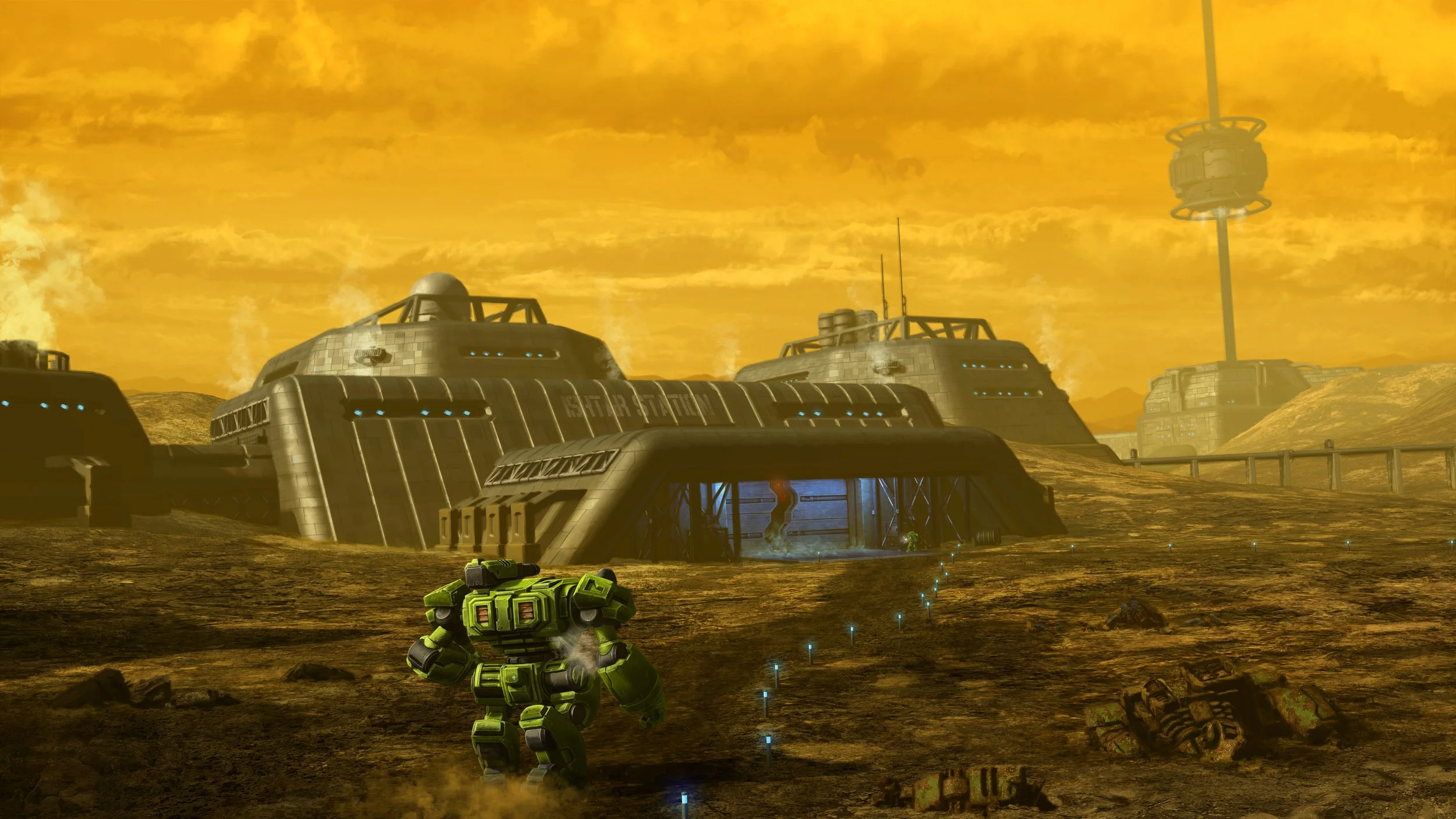
Illustration by Florian Mellies
